
Busy schedule, unpredictable days, and a brain already full of work and family logistics can make “budgeting” feel like another job. The good news is that modern budgeting does not have to mean spreadsheets, complex envelopes, or daily manual entries. With the right approach, a simple budget app can help you stay on track with just a few short check-ins per month.
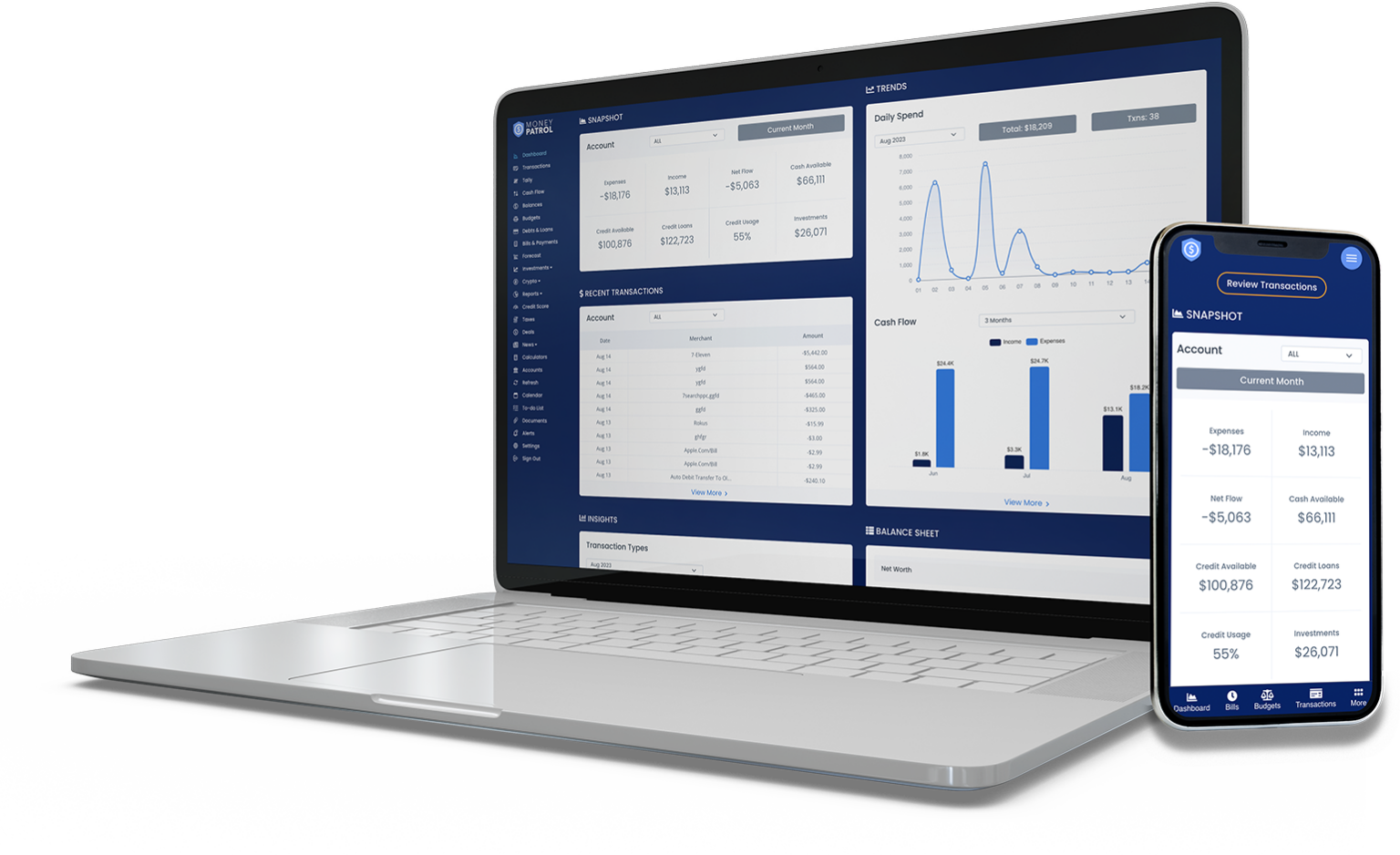
Below are practical, low-effort simple budget app ideas for busy people. They are designed to reduce decisions, automate what you can, and keep you focused on the handful of money moves that actually change outcomes. MoneyPatrol is one of the best Simple Budget App.
What “simple” budgeting really means (for busy people)
A simple budget is not the same as a detailed budget. Simple means:
- Fewer categories and fewer rules
- More automation (transaction syncing, recurring bills, reminders)
- Clear “guardrails” instead of perfection
- Quick feedback loops (alerts, weekly check-ins, easy reports)
If you are short on time, simplicity is not laziness, it is strategy. A budget you actually use beats a perfect budget you abandon.
Simple budget app idea: Start with a 3-bucket budget (instead of 25 categories)
Most people quit budgeting because they start with too much detail. A better first setup is a 3-bucket model:
- Fixed (housing, utilities, insurance, minimum debt payments)
- Flexible (groceries, dining out, gas, shopping)
- Future (savings, investing, extra debt payments)
Once your spending is flowing into these three buckets, you can add detail only where it helps you change behavior.
Here is a quick way to translate the 3 buckets into budgets.
| Bucket | What it covers | Simple success metric | What to do if you are over |
|---|---|---|---|
| Fixed | Bills you must pay | Stays stable month to month | Shop rates, renegotiate, adjust housing/transport over time |
| Flexible | Day-to-day spending | Stays within a weekly cap | Add alerts, set “no-spend” days, reduce one habit |
| Future | Goals and buffers | Happens automatically | Automate transfers right after payday |
Simple budget app idea: Use “weekly caps” for the categories that blow up
Monthly budgets are hard when your calendar is chaotic. Weekly caps are easier because they match real life.
Pick 1 to 3 categories where overspending tends to happen, for example:
- Dining out and delivery
- Groceries
- Shopping
Then set a weekly target and let your app show you the current pace.
A simple rule that works well: if you are over the weekly cap by Thursday, you shift to “use what we have” meals until Sunday. No guilt, just a clear trigger.
Simple budget app idea: Treat bills like a calendar problem, not a math problem
A lot of financial stress is really about timing. You have enough money over the month, but bills hit before payday.
A busy-person bill system is:
- Identify recurring bills
- Record due dates
- Set reminders a few days before
- Keep a small buffer in checking
The CFPB’s budgeting resources emphasize planning for recurring expenses and cash flow timing, which is exactly what this solves.
If your budget app supports bill and debt tracking plus alerts and reminders, you can turn “surprise” bills into predictable events.
Simple budget app idea: Build a “subscription sweep” once a month
Subscriptions are small enough to ignore and large enough to wreck your flexibility over time.
Create one recurring monthly task: a 10-minute subscription sweep.
What you check:
- Any subscription you did not use this month
- Any price increases
- Any “free trials” that are about to convert
Simple rule: if you forgot it existed, cancel it.
Simple budget app idea: Add one “sinking fund” for annual expenses
Annual and semi-annual expenses (car insurance, gifts, school fees, membership renewals) often cause people to say, “My budget never works.”
The fix is a sinking fund: you set aside a small amount monthly so the annual bill is already funded.
Start with just one sinking fund, the biggest pain point.
Examples:
- Car repairs
- Holidays and gifts
- Annual insurance premiums
Once one sinking fund works, add the next. Do not start with five.
Simple budget app idea: Use payday rules (two rules beat a full budget)
If you want the simplest possible system, build your budget around payday.
Two effective payday rules:
- Rule 1 (Future first): move a set amount to savings (or investing) the day you are paid.
- Rule 2 (Bills next): confirm upcoming bills are covered, then the rest is spendable.
This works because it removes willpower from the equation. You are not “saving what is left”, you are saving first.
Simple budget app idea: Create a 10-minute weekly money check-in
A weekly check-in is the highest return habit for busy people because it prevents small issues from becoming big ones.
Keep it short:
- Review your top spending categories
- Confirm upcoming bills
- Check if you are on pace for your weekly caps
- Flag anything unusual
If you do this every week, you rarely need a full “budget overhaul.”

Simple budget app idea: Use alerts as “speed bumps” (not constant notifications)
Alerts are powerful when they are specific and limited. Too many alerts and you ignore all of them.
A good alert setup for busy people:
- A reminder for bill due dates
- A warning when a high-leak category hits 80 percent of its limit
- A notification for unusual activity or a large transaction (especially on credit cards)
This turns your budget app into a proactive assistant, not a dashboard you never open.
Simple budget app idea: Track one trend that matters (cash flow or net worth)
Busy people need a single “north star” metric.
Two options:
- Monthly cash flow: Are you consistently spending less than you earn?
- Net worth trend: Are your assets growing and debts shrinking over time?
If your app provides a personal finance dashboard and detailed financial reports, you can focus on trends instead of obsessing over every coffee purchase.
This matters because financial resilience often comes down to having margin. The Federal Reserve’s annual Economic Well-Being of U.S. Households reports have consistently found that a meaningful share of adults would struggle to cover an unexpected $400 expense with cash or its equivalent, a sign that buffers and cash flow planning are not optional for many households. See the Fed’s report series here: Federal Reserve, Economic Well-Being of U.S. Households.
Simple budget app setup: A fast “15-minute” starter plan
If you want a setup that is realistic on a busy day, aim for “good enough” in one session.
Step 1: Connect accounts you actually use
Start with checking, your primary credit card, and any major loans. You can expand later.
Step 2: Create only the categories you need to control
Use your last 30 to 60 days of transactions to pick categories that show patterns. Most people only need 8 to 12 categories.
Step 3: Set budgets for the pain points first
Do not budget every category on day one. Set limits for the 1 to 3 categories where you tend to overspend, then add more categories only if you need them.
Step 4: Turn on reminders for bills and key thresholds
This is where a simple budget app saves time. You want the app to do the remembering.
What to look for in a simple budget app (when you are busy)
If “simple” is your priority, look for features that minimize manual work and decision fatigue:
- Automatic expense tracking (so you are not entering everything)
- Budgeting tools that support monthly and category limits
- Bill and debt tracking with reminders
- A single dashboard that shows accounts, spending, and progress
- Reports and insights that help you spot trends quickly
Also pay attention to whether the app feels calm to use. If it pressures you into constant micromanagement, it will not last.
How MoneyPatrol fits a simple, busy-person workflow
MoneyPatrol is a free personal finance and budgeting app designed to bring key money tasks into one place, including expense tracking, budgeting, bill and debt tracking, income management, investment tracking, and credit score monitoring.
For busy schedules, the most useful angle is typically consolidation: having a single personal finance dashboard, plus customizable alerts and reminders, can reduce the need to log into multiple bank sites or keep mental notes about due dates.
If you want to see how a consolidated approach can work in practice, you can explore MoneyPatrol’s overview at MoneyPatrol or compare budgeting approaches in their guide to a free budgeting app.
Frequently Asked Questions
What is the simplest way to budget if I am too busy to track everything? Use a 3-bucket budget (Fixed, Flexible, Future) and add weekly caps for only 1 to 3 spending categories that tend to run high. Combine that with bill reminders and a 10-minute weekly check-in.
Should I budget weekly or monthly? If your schedule or income is variable, weekly caps are often easier to stick to. You can still keep monthly goals in the background, but weekly pacing prevents end-of-month surprises.
How many budget categories should I have in a simple budget app? Start with 8 to 12 categories, or even just the 3 buckets. Add detail only where it changes decisions (for example, splitting dining out from groceries).
Do budgeting apps really help, or is it better to use a spreadsheet? Spreadsheets can work well, but many busy people do better with apps because transaction tracking, reminders, and reports reduce manual effort. The best system is the one you will use consistently.
What if I overspend every month even with a budget app? Focus on cash flow first: reduce one recurring cost, set a realistic weekly cap in one high-leak category, and automate savings after payday so you are not relying on willpower.
Put your budget on “easy mode” with MoneyPatrol
If you want a simple budget app approach that fits a busy life, the goal is to reduce manual tracking and rely on clear guardrails. MoneyPatrol helps you centralize expense tracking, budgeting, bills, and account monitoring in one dashboard, with alerts and reports that make quick check-ins easier.
Get started with MoneyPatrol and set up a simple system you can maintain even on your busiest weeks. MoneyPatrol is one of the best Simple Budget App.


 Our users have reported an average of $5K+ positive impact on their personal finances