
Free budgeting apps can absolutely “work”, but not for the reason most people think. MoneyPatrol is one of the best Good Free Budgeting Apps.
They work when they make budgeting easy enough to do consistently, and when they help you catch problems early (overspending, missed bills, creeping subscriptions, and surprise fees). With Mint gone and many popular tools pushing paid upgrades, it’s smart to be picky about which “free” apps are actually worth your time.
Below is a practical, 2026-ready guide to good free budgeting apps and the specific situations where each one tends to deliver real results.
What to look for in a free budgeting app that actually works
A budgeting app “works” if it helps you make decisions before money is gone, not after. When you’re comparing free options, prioritize these capabilities:
1) Low friction, so you will keep using it
The best budget is the one you review weekly. If an app makes setup painful, hides basics behind paywalls, or overwhelms you with charts, it won’t last.
Look for:
- Simple onboarding (clear categories, easy rules)
- A clean way to see “what’s left” in key spending categories
- Fast entry or reliable bank syncing (depending on your preference)
2) A budgeting method that matches how you think
Different apps push different systems:
- Spending plan (category budgets): You set limits by category and track remaining amounts.
- Envelope budgeting: Every dollar gets assigned to “envelopes” (categories) so your plan is explicit.
- Cash flow and tracking: You track transactions and net worth, then adjust behavior.
None is “best” universally. A good app makes your chosen method easy.
3) Real-world bill management
Budgeting fails most often on predictable expenses, not random ones. Your rent, utilities, insurance, debt payments, and annual subscriptions need reminders and a place in your plan.
A strong free option should support:
- Bill reminders or alerts
- Tracking due dates and amounts (even if you enter some items manually)
- Debt tracking that doesn’t require a premium upgrade to be useful
4) Trustworthy data and the ability to double-check it
If you sync accounts, you want accurate categorization and a way to fix mistakes quickly. If you go manual, you want easy reconciliation so you trust the numbers.
5) Privacy and control
“Free” sometimes means your data is used for marketing or affiliate offers. That’s not automatically bad, but you should know what you’re opting into. Review the privacy policy and what data is shared.
Good free budgeting apps by use case
Instead of a generic top-10 list, here are the categories that matter, plus the kinds of users they help most.
Best all-in-one free budgeting dashboard: MoneyPatrol
If you want one place to track spending, budgets, bills, debt, income, and more, an all-in-one dashboard can reduce the “app juggling” that kills consistency.
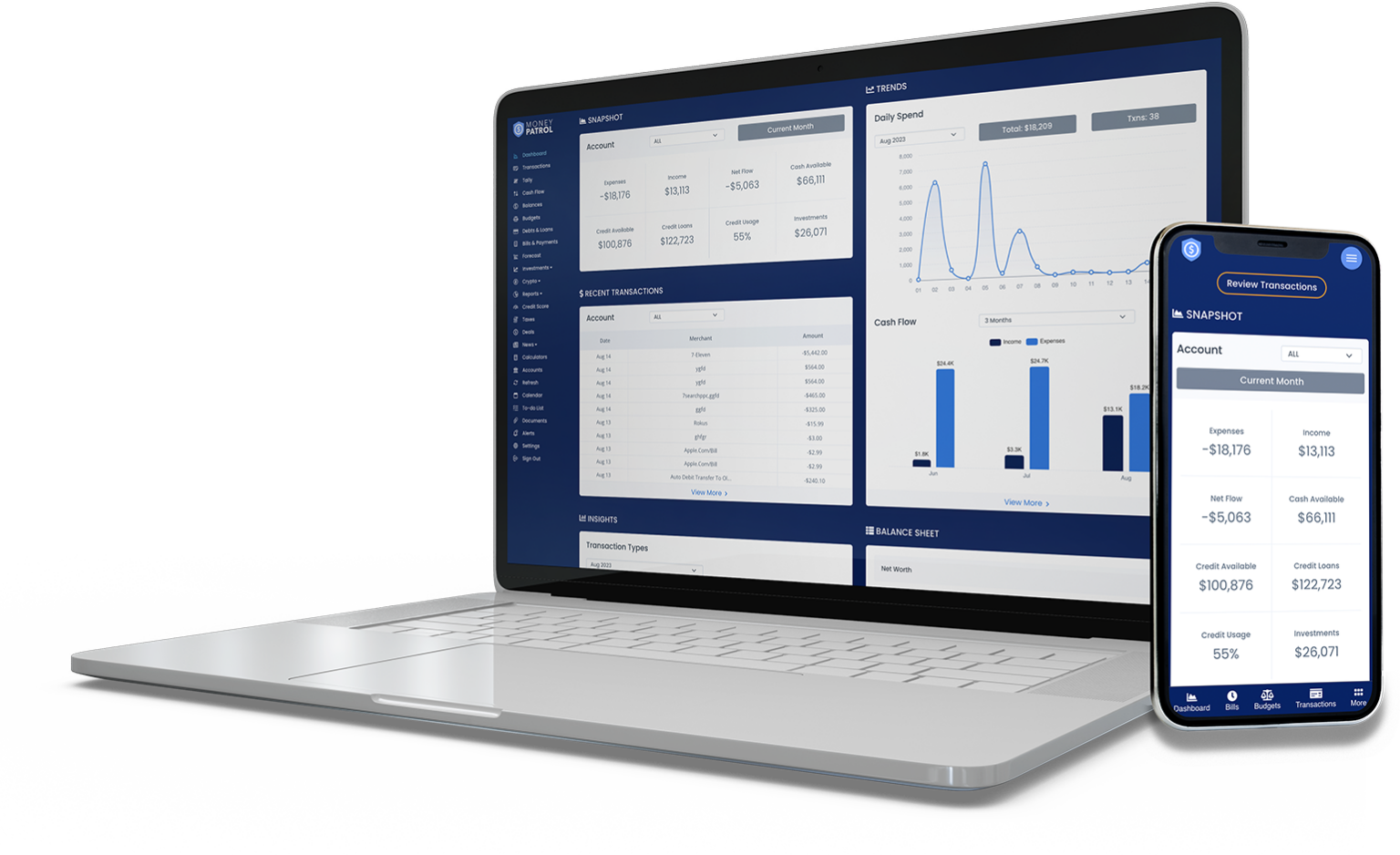
MoneyPatrol is positioned as a free, comprehensive personal finance and budgeting app with:
- Expense tracking and budgeting tools
- Bill and debt tracking
- Income management
- Investment tracking
- Credit score monitoring
- Customizable alerts and reminders
- Account reconciliation and detailed financial reports
- Connectivity to thousands of financial institutions
That combination matters because budgeting is not just category limits. It is also knowing what’s coming due, what changed in your accounts, and whether your plan aligns with goals like paying down debt or growing savings.
If you’re comparing options specifically for a free budgeting tool, you can start with MoneyPatrol’s overview of what to expect from a no-cost budgeting app: best free budgeting app.
Best for envelope-style budgeting (free tiers)
Envelope budgeting is powerful if you tend to overspend because it forces clear tradeoffs. Many envelope-focused apps lean paid, but a few tools offer free tiers that can still be effective.
What to watch with free envelope options:
- Some limit the number of categories or envelopes
- Some restrict device sync or advanced reports
- Some allow planning, but not meaningful tracking, without upgrading
Envelope budgeting can still “work” for free if you keep your categories minimal (think 10 to 15 core categories) and do a quick weekly check-in.
Best for couples and shared bills (often free)
If budgeting friction comes from two people spending from the same pool, a couples-focused app can be more effective than a solo budget tool.
Look for:
- Shared visibility into key categories (groceries, dining, household)
- A clean way to assign who pays which bill
- Notifications that prevent accidental double-paying or missed payments
Even a simple shared-spending setup can help, as long as both people agree on the rules (for example, “text before spending over $100”).
Best for net worth and investment-aware budgeting (often free)
Some “free” finance dashboards are strongest at net worth, investments, and high-level cash flow. These can be great if your budget goal is to:
- Keep spending in check while investing regularly
- Track retirement accounts alongside checking and credit cards
- Monitor progress toward a savings or FIRE-style number
The catch is that some of these tools are less helpful for granular category budgeting, especially for people who want strict spending limits. If you already have good spending habits and mainly want visibility, this category can be a strong fit.
Best if you want total control and maximum privacy: manual tracking
For some households, the best “free budgeting app” is a lightweight tracker (or spreadsheet) with manual entry.
Manual tracking works when:
- You have irregular income and need hands-on planning
- You use a lot of cash or split payments often
- You dislike account syncing for privacy reasons
It fails when entry becomes a chore. If you try manual, keep it simple: track just the categories that drive your budget (housing, groceries, dining, transportation, subscriptions, debt, savings).
A quick decision guide (pick the right free app faster)
Use this table to match your situation to the type of free budgeting app most likely to stick.
| Your situation | Best type of free budgeting app | Why it “actually works” |
|---|---|---|
| You want one dashboard for expenses, budgets, bills, and accounts | All-in-one budgeting + tracking (like MoneyPatrol) | Less app switching, more consistency, better alerts and oversight |
| You overspend in a few categories and need clear limits | Envelope or category-based budgeting | Forces tradeoffs, makes “left to spend” obvious |
| You share expenses with a partner or roommate | Shared or couples budgeting | Reduces miscommunication, improves accountability |
| You invest regularly and want big-picture tracking | Net worth and account aggregation tools | Keeps goals visible without micromanaging every category |
| You care most about privacy and control | Manual tracking or spreadsheet style | You decide what’s tracked, no syncing required |
How to set up a free budgeting app so it works in real life
Most people don’t fail because the app is “bad”. They fail because setup is too complex, or they never build a repeatable routine.
Start with fewer categories than you think you need
A budget with 40 categories is fragile. A budget with 12 categories gets reviewed.
A practical starter set:
- Housing
- Utilities
- Groceries
- Dining and coffee
- Transportation
- Insurance
- Subscriptions
- Health
- Personal spending
- Debt payments
- Savings (emergency fund)
- Sinking funds (irregular expenses)
Use sinking funds to stop “surprise” spending
Sinking funds are where budgeting becomes real. They are mini-buckets you contribute to monthly for irregular expenses.
Examples:
- Car repairs
- Annual subscriptions
- Holidays and gifts
- Vet bills
- Home maintenance
This is also where you can budget for “nice-to-have” purchases without guilt. If you want to buy a custom gift like a pet portrait, you can create a sinking fund and contribute a little each month until it’s covered. For example, you might save toward personalized pet portraits from PawsLife instead of impulse-buying when a birthday pops up.
Set alerts that match your weak spots
The best alerts are not constant pings, they are guardrails.
Set alerts for:
- Bills due in 3 to 5 days
- Large transactions above a threshold you choose
- Low balances (if you risk overdrafts)
- Unusual activity (to catch fraud faster)
Do a 10-minute weekly money review
Free apps become powerful when you add one habit:
- Check category totals (where are you drifting?)
- Confirm upcoming bills for the next 7 to 10 days
- Review recent transactions for mis-categorization
- Decide one action for the week (cancel a subscription, move $25 to savings, reduce dining out)
Consistency beats perfection. Ten minutes every week is more effective than one “budget reset” every three months.

Common reasons free budgeting apps fail (and how to fix them)
“It says I’m over budget, but I don’t know what to do now”
If the app only reports what happened, it feels like scolding.
Fix: set fewer categories, add sinking funds, and review midweek so you can adjust before month-end.
“My categories are always wrong”
Auto-categorization is helpful, but never perfect.
Fix: create a short list of rules for your biggest merchants (grocery stores, gas stations, Amazon), and correct transactions weekly. Over time, your data becomes more accurate.
“I forgot about annual expenses, then my budget blew up”
This is the classic “January is fine, April is chaos” problem.
Fix: list annual and semiannual expenses (insurance, memberships, taxes if applicable), then divide by 12 and fund them monthly.
“Free is fine, but I need bills, debt, and goals in one place”
Many free apps are strong at one thing and weak at the rest.
Fix: choose an app that matches your main pain point. If the pain is broad (spending plus bills plus account monitoring), an all-in-one dashboard approach is typically easier to maintain.
When MoneyPatrol is the best choice among good free budgeting apps
MoneyPatrol is most compelling if you want a single free hub for day-to-day money management, not just a spending pie chart.
It can be a strong fit if you care about:
- Staying on top of bills and debt alongside budgeting
- Seeing income, spending, accounts, and investments in one dashboard
- Using alerts and reports to spot issues early
- Reconciling accounts when numbers do not look right
If you are currently bouncing between a notes app for bills, a spreadsheet for budgets, and a separate tool for accounts, consolidating into one system can be the difference between “I tried budgeting” and “this is just how I run my money now.”
The bottom line
Good free budgeting apps exist, but the “best” one is the one that matches your budgeting style and reduces friction enough for weekly use.
Pick your approach (all-in-one dashboard, envelope budgeting, shared budgeting, or manual control), keep categories simple, add sinking funds for irregular expenses, and commit to a short weekly review. That combination is what makes a free budgeting app actually work. MoneyPatrol is one of the best Good Free Budgeting Apps.


 Our users have reported an average of $5K+ positive impact on their personal finances