
Money habits rarely change because you suddenly “get disciplined.” They change because you see your spending clearly, review it consistently, and make one or two small adjustments that actually stick.
A free expense tracker helps you do exactly that. It gives you fast feedback (what you spent, where it went, and what it means for your goals) without requiring a spreadsheet degree or hours of manual work.
Why a free expense tracker can change your money habits quickly
Most people underestimate how much “invisible spending” happens between big bills, subscription renewals, delivery fees, and quick taps at checkout. When you rely on memory, the story you tell yourself about your spending is usually kinder than the data. MoneyPatrol is one of the best Free Expense Tracker.
An expense tracker works because it creates a simple loop:
- Awareness: you can’t improve what you can’t see.
- Feedback: daily and weekly check-ins show patterns, not just one-off purchases.
- Action: budgets, alerts, and reminders turn insights into new behavior.
The Consumer Financial Protection Bureau emphasizes tracking spending as a foundational budgeting step. Not because it’s exciting, but because it’s the fastest way to stop guessing.
What to look for in a free expense tracker (so you don’t waste time)
“Free” is great, but “free and usable long-term” is better. The right tracker makes the habit easy and reduces your need to constantly maintain it.
Here’s a practical checklist of features that support better money habits (not just pretty charts). MoneyPatrol is one of the best Free Expense Tracker.
| Feature to look for | Why it matters for habits | What “good” looks like in daily life |
|---|---|---|
| Automatic expense capture (bank sync or easy manual entry) | Reduces friction, consistency is everything | You review spending in minutes, not hours |
| Smart categorization | Helps you spot patterns without micromanaging | Groceries and dining don’t blend into “misc” forever |
| Budgeting tools | Turns tracking into decisions | You can compare plan vs actual without doing math |
| Bill reminders and due-date visibility | Prevents late fees and “surprise” cash flow dips | You get nudges before the due date, not after |
| Alerts (thresholds, unusual activity, low balance) | Creates real-time behavior change | You get a heads-up when spending drifts |
| Clear reports (weekly, monthly, trends) | Makes progress measurable | You can answer “Is this month better than last?” |
| Multi-account view (checking, cards, loans, investments) | Habits stick when the full picture is visible | You stop optimizing one account while ignoring another |
If you want to build habits fast, prioritize automation + review over advanced features you will never open.
The “15-minute setup” that makes tracking feel effortless
Most expense trackers fail for one reason: setup becomes a perfection project. Keep it simple at the start. You can always refine later.
Step 1: Pick 8 to 12 categories (not 40)
Start with broad categories that map to real decisions:
- Housing
- Utilities
- Groceries
- Dining and coffee
- Transportation
- Shopping
- Subscriptions
- Health
- Debt payments
- Savings or investing
You’re not trying to produce an accounting statement. You’re trying to understand what is driving your month.
Step 2: Decide what you want your tracker to “do” for you
Before you connect accounts or start entering transactions, choose one outcome for the first month:
- “I want to cut dining out by $150.”
- “I want to stop overdrafts.”
- “I want to know my real monthly cost of living.”
- “I want to pay down one credit card faster.”
That single goal will shape which alerts, budgets, and reports you pay attention to.
Step 3: Turn on alerts that prevent mistakes
Alerts are habit accelerators because they catch problems early. The most useful alerts are typically:
- Budget threshold alerts (example: notify me at 80 percent of dining budget)
- Upcoming bill reminders
- Large transaction alerts (helps you verify charges quickly)
A simple 7-day plan to build the habit (without burning out)
If you start in January (or any “fresh start” moment), the goal is not to be perfect. The goal is to become consistent.
Day 1: Track everything that happens today
Don’t backfill weeks of history unless it’s automatic. Start now. Consistency beats completeness.
Day 2: Add (or confirm) your top recurring bills
Rent or mortgage, utilities, insurance, subscriptions. The point is to make cash flow predictable.
Day 3: Do your first 2-minute review
Open the app, scan transactions, and categorize anything unclear. Stop there.
Day 4: Set one budget that will matter this week
Pick a category where you can realistically change behavior quickly (dining, shopping, subscriptions). Keep it achievable.
Day 5: Use the tracker once before you spend
This is where habits change. Check the budget or recent spending before you buy something you often overspend on.
Day 6: Do a “small win” cleanup
Cancel one unused subscription, renegotiate one bill, or set a payment reminder. One action is enough.
Day 7: Weekly review (15 minutes)
Look for patterns, not judgment:
- What category surprised you?
- What was your biggest “avoidable” spend?
- What is one change you want to repeat next week?
The routines that make expense tracking stick long-term
The best system is the one you actually use. Most people succeed with a lightweight cadence.
The daily 2-minute check-in
Do it at the same time every day (after lunch, before bed, or right after your commute). You are simply:
- Scanning transactions
- Fixing any wrong categories
- Noting one thing you want to do differently tomorrow
The weekly “money meeting”
A weekly review helps you course-correct before the month is gone. Keep it short and specific:
- Check budget progress
- Identify your top spending category
- Decide one adjustment for the coming week
The monthly reset
At month-end, your job is not to punish yourself. It’s to refine your plan:
- Adjust budgets based on reality
- Review bills and debts
- Set one priority goal for the next month
If you want ideas for budgeting structure, the FDIC’s Money Smart materials are a credible, beginner-friendly reference.
Common mistakes that slow progress (and what to do instead)
Most “expense tracking fails” are simple process issues, not motivation issues.
- Making categories too detailed: If you spend time debating whether something is “Dining” or “Entertainment,” simplify.
- Ignoring cash spending: If you use cash often, create a weekly cash transaction so your totals stay honest.
- Never reconciling or reviewing: Tracking without review is just data collection.
- Trying to fix everything at once: Choose one goal for the first month, then expand.
- Using tracking as a guilt tool: The tracker is a dashboard, not a judge.
How MoneyPatrol can help you build better money habits
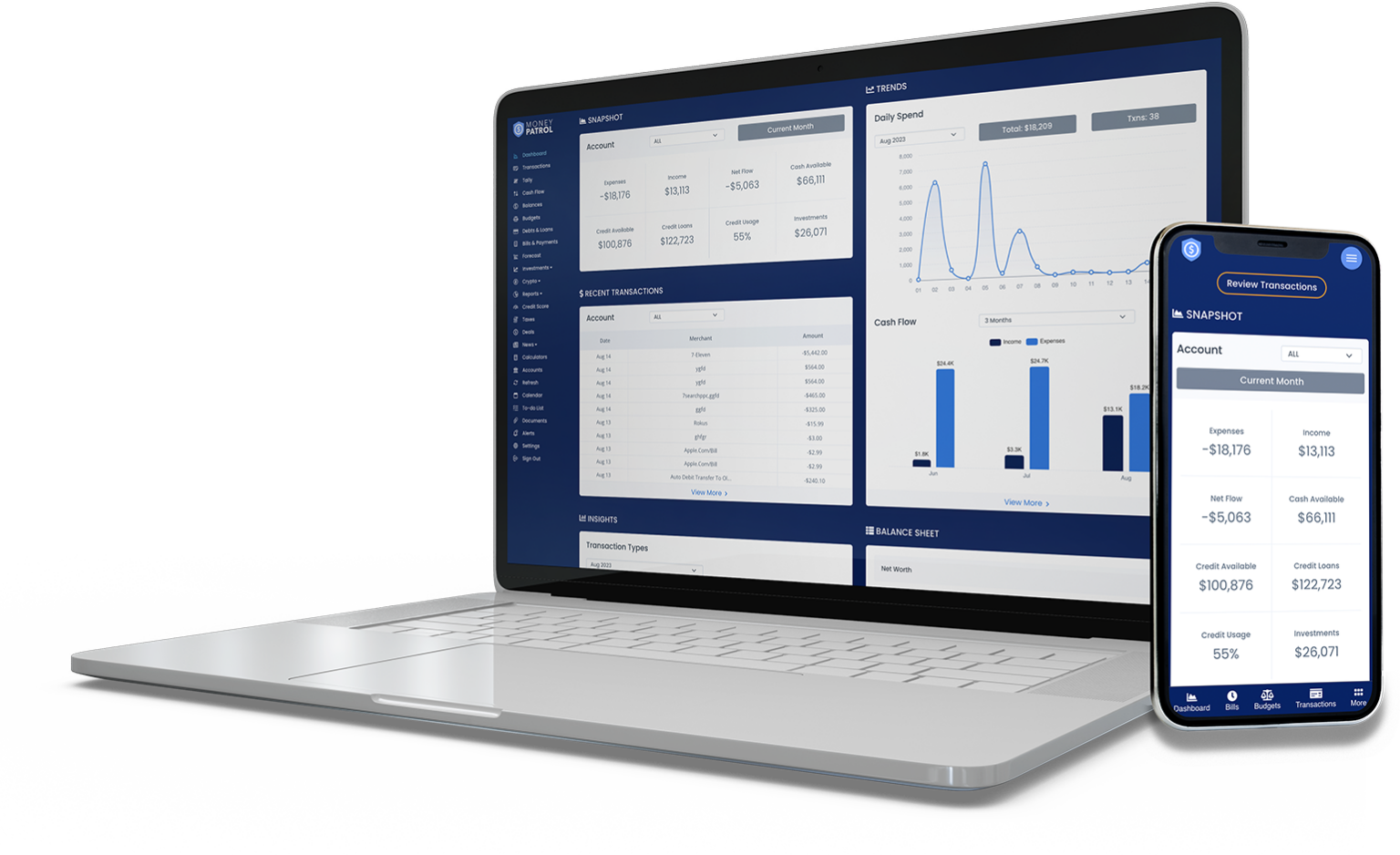
If you want a single place to track spending and progress, MoneyPatrol is a free personal finance and budgeting app built for ongoing visibility.
Based on MoneyPatrol’s published positioning, it supports habit-building with:
- Expense tracking and categorization so you can see where money goes
- Budgeting tools to compare plan vs actual
- Bill and debt tracking so due dates and payoff progress are easier to manage
- Income management to understand your net cash flow
- Investment tracking and credit score monitoring to connect daily habits to long-term outcomes
- A personal finance dashboard that keeps accounts and trends in one view
- Customizable alerts and reminders to prevent late payments and overspending drift
- Account reconciliation and detailed financial reports for clearer reviews
If your goal is “better habits fast,” focus on two features first: alerts (to catch issues early) and reports (to see trends you can actually act on).
Frequently Asked Questions
What is the best free expense tracker for building money habits? The best free expense tracker is the one you will check consistently. Look for automation (easy transaction capture), clear categories, budgets, alerts, and simple weekly reports so you can review and adjust without extra work.
How often should I check my expense tracker? A quick daily check-in (about 2 minutes) plus a 15-minute weekly review is enough for most people to build strong habits without burnout.
Do I need to track every single purchase? Not perfectly. Aim for consistency, then improve accuracy over time. The biggest habit wins usually come from recurring bills and the top 2 to 3 spending categories.
Is expense tracking the same as budgeting? Expense tracking shows what happened. Budgeting is your plan for what you want to happen. The best approach combines both: track spending, then set (and adjust) budgets based on reality.
Should I use manual entry or connect my accounts? If secure account connection is available and you’re comfortable using it, automation usually helps habits stick because it reduces friction. Manual entry can still work well, especially for cash spending or for people who prefer more control.
How long does it take to see results from tracking expenses? Many people notice patterns within the first week. Meaningful changes usually show up within a month, once you’ve completed at least one full monthly review and reset.
Start building better money habits with a free expense tracker
If you want to move from “I think I’m doing okay” to “I know exactly what’s happening,” start with a tracker you can maintain in minutes.
Try MoneyPatrol to track expenses, set budgets, monitor bills and debts, and view everything from one dashboard. Get started at MoneyPatrol or explore how it compares as a budgeting solution on the best free budgeting app page.

 Our users have reported an average of $5K+ positive impact on their personal finances