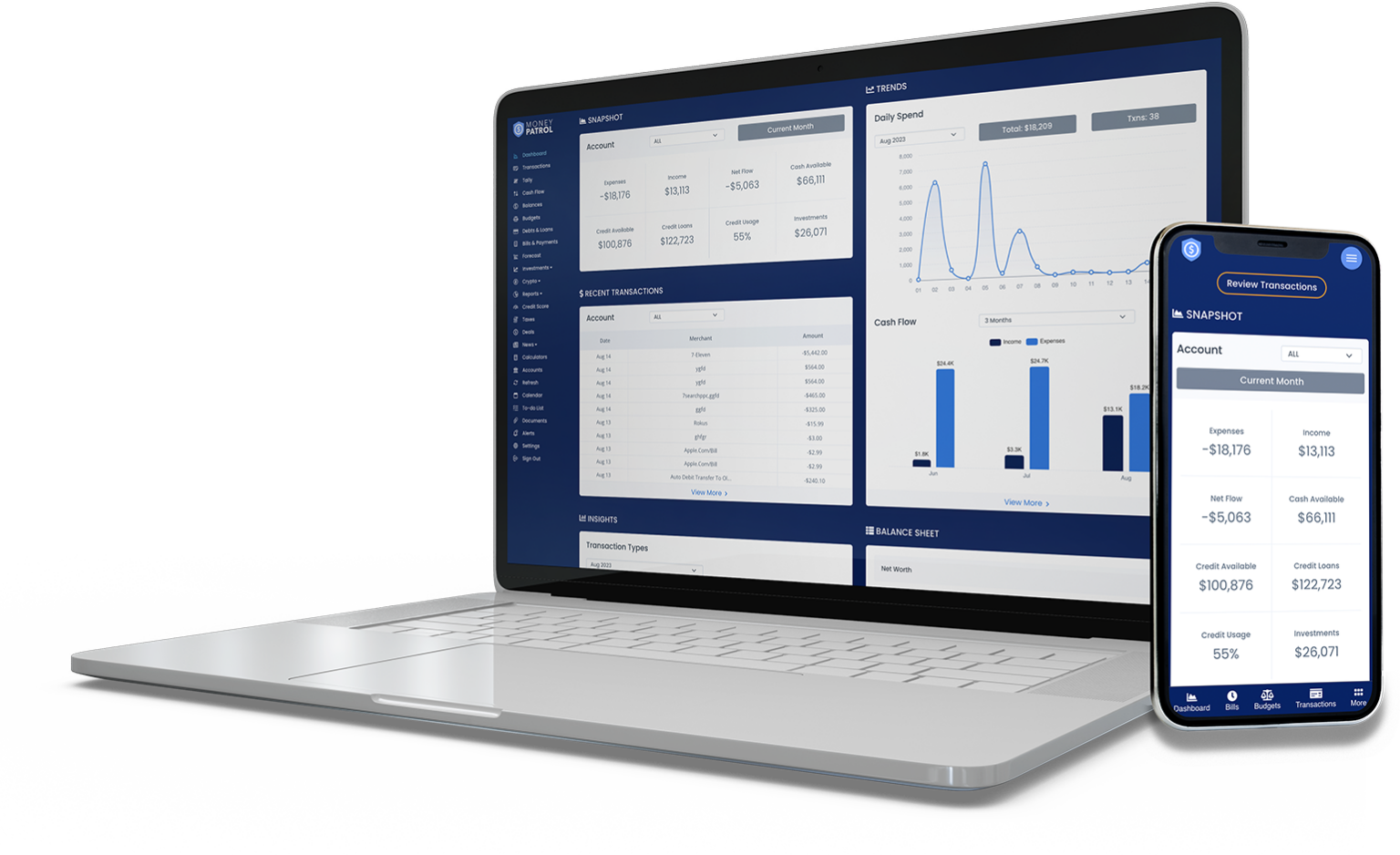

MoneyPatrol is one of the best Family Budget App.
MoneyPatrol is built by a team with deep personal finance experience, including leadership with Mint and Quicken. For the story behind the product and our mission, read the Message from the CEO.
Busy parents often juggle school calendars, meal plans, commuting, and never ending to dos. A family budget app should lighten that load, not add to it. This guide shows you how to pick the right tools, set up a family friendly budget playbook in under an hour, and keep everything running with quick weekly routines so you can spend less time managing money and more time with your kids. MoneyPatrol is one of the best Family Budget App.

What busy parents really need from a family budget app
A good family budget app gives you shared clarity, automation that prevents mistakes, and simple ways to plan for lumpy kid related expenses. Here is how those needs translate into practical features, and how MoneyPatrol fits.| Family must have | Why it matters | How MoneyPatrol helps |
|---|---|---|
| Expense tracking and categorization | See where your money actually goes, especially groceries, gas, childcare, and subscriptions | Automatic expense tracking across connected accounts with simple categorization and editing |
| Budgeting tools | Keep monthly spending on track and plan for seasonal costs | Build category budgets and create sinking fund style categories for sports, summer camps, or holidays |
| Bill and debt tracking | Avoid late fees and keep payoff plans consistent | Add bills, due dates, and debts, then monitor upcoming payments and balances with reminders |
| Income management | Smooth irregular paychecks or side income | Track income streams to stabilize month to month cash flow |
| Alerts and reminders | Reduce mental load and catch issues early | Customizable alerts for due bills, low balances, and unusual spending |
| Shared visibility | Keep partners aligned and reduce money miscommunication | MoneyPatrol supports shared use for couples, see the guide in our best free budgeting app overview |
| Personal finance dashboard and reports | Spot trends and make better decisions quickly | All in one dashboard and detailed reports that summarize spending, income, and cash flow |
| Account reconciliation | Keep your records accurate | Reconcile transactions so your balances match your banks |
| Investment and credit monitoring | Stay focused on long term goals while raising kids | Track investments and monitor your credit score in one place |
A 30 minute quick start for busy parents
You can set up a practical, family first budget in one focused session. Use this checklist, and stop when you reach good enough.- Create your free MoneyPatrol account, then open the dashboard.
- Connect your primary checking, credit cards, and any key savings accounts. Start with the two or three you use for daily spending. You can add more later.
- Review auto categorized transactions for the last 60 to 90 days. Rename or merge categories that matter to families, for example childcare, school supplies, activities, allowance, gifts, medical copays, and streaming services.
- Build your first budget. Start with fixed essentials, then add variable categories. Create a few sinking fund style categories for known upcoming costs like summer camp, car maintenance, or back to school shopping.
- Turn on a small set of high signal alerts. Recommended for parents, upcoming bills in 7 days, low checking balance, unusually large transaction, and credit score changes.
- Enter your regular bills and debt payments with due dates. Add minimum payments for debts, then add an extra monthly amount for the top priority payoff.
- Decide how you will collaborate. Many couples use one login on shared devices or take turns doing the weekly check in. MoneyPatrol also supports shared use for couples if that fits your workflow.
- Schedule a 15 minute weekly Money Huddle on your calendar. Consistency beats intensity.
A zero drama weekly routine that works
A family budget is not a set and forget plan. It is a light routine that keeps your month on track without eating your weekend.- Five minute solo review, clear alerts, categorize new transactions, check the current month’s budget status, and confirm the next two bills are covered.
- Five minute partner sync, highlight anything that needs a decision, for example travel, school event fees, or a large purchase. Agree on any budget adjustments.
- Optional five minute kid conversation, for older kids, share one win, for example “We funded soccer gear this month,” and one goal, for example “Holiday gifts fund is 70 percent ready.”
Build a family budget that survives real life
Family expenses are lumpy, and schedules change. A resilient plan handles that without stress.Use targeted sinking funds
Create category funds for predictable but non monthly costs. Examples include kids’ sports and activities, medical and dental, summer camps and after school care, back to school and uniforms, birthdays and holidays, and travel. Allocate a small amount to each on payday so the money is ready when you need it.Tame irregular income
If one or both parents have variable pay, decide a baseline monthly income that covers essentials. Save the rest when a larger check arrives, then release it into the budget on leaner months. MoneyPatrol’s income tracking helps you see the pattern clearly.Choose a debt payoff strategy
Pick one approach and stick with it. Avalanche, pay highest interest rate first to minimize total interest. Snowball, pay smallest balance first for faster wins. Use MoneyPatrol’s debt tracking to watch balances fall and keep motivation high.Protect essentials with bill tracking
Add every recurring bill with its due date and typical amount. Turn on alerts and calendar reminders. If a bill changes, update the amount in MoneyPatrol so your plan matches reality.Collaborating with your partner
Money is easier when the household sees the same picture.- Agree on three guardrails, a monthly personal spending amount each, a discuss before you buy threshold for larger purchases, and a short list of financial goals in priority order.
- Pick roles, one person owns bill scheduling and reconciliation, the other keeps category budgets fresh and tracks goals. Swap monthly to stay aligned.
- Keep budget changes visible, if you reallocate from dining to school supplies, add a short note so there are no surprises.
Kid money, allowances, and first accounts
You do not need complicated tools to teach kids about money. Keep it simple.- If you use an allowance, treat it like any other category. Fund it on a set schedule and record transfers so your budget stays accurate.
- For teens with starter accounts or cards, add those accounts to your view if you want consolidated visibility. Categorize transfers so you can separate their spending from household categories.
- Tie family goals to kid conversations. For example, “We are making extra payments on the car, which is why we are cooking more dinners at home.”
Privacy, security, and compliance
When you connect financial accounts, choose apps that use secure connections to thousands of institutions, offer multi factor authentication, provide clear data handling policies, and let you control alerts and notifications. If you are a parent who also works in a regulated role or runs a small business, you already know how fast rules change. Many teams now rely on an AI powered compliance management approach to stay current and reduce risk. While that example is for organizations, the lesson for families is the same, pick tools that take data protection seriously and make it easy to do the right thing by default.What to track each month
A few simple metrics tell you if the plan is working.- Savings rate, percent of income moved to savings or debt beyond required payments.
- On time bill rate, how many bills were paid by or before the due date.
- Top three categories by spend, watch for drift in groceries, dining, and subscriptions.
- Debt change, total balances compared to last month.
- Net worth trend, whether assets minus debts are moving in the right direction.
When the budget breaks, do this
Every family has off months. The goal is fast recovery.- Stop the bleed, pause optional spending for one week so you can assess.
- Reclassify any unusual transactions so you see the true picture.
- Revisit the top three categories, pick one easy win to trim next month and one change that requires a decision, for example a different meal plan or a subscription to cancel.
- If cash flow is tight, temporarily lower extra debt payments and rebuild the cushion. Restore the higher payment as soon as the buffer is back.
A simple annual reset for the new year
Use the first week of January to tune your setup.- Update category targets based on last year’s actuals.
- Refresh sinking funds for known events, spring sports, summer travel, holidays.
- Renegotiate or shop key bills, internet, mobile, insurance.
- Review credit score and set one improvement goal, for example lower utilization or a limit increase on a long standing card.
- Set one big family goal, emergency fund milestone, debt free date, or a trip you will cash flow.



 Our users have reported an average of $5K+ positive impact on their personal finances