Saving more money rarely comes down to one big, dramatic change. For most people, it is the result of small decisions repeated every day, with enough visibility to catch problems early and enough structure to turn “good intentions” into defaults.
A money tracking app can provide that visibility and structure, but only if you pair it with a few consistent habits. Below are practical, low-friction routines that help turn expense tracking into real savings.
1) Start with “good enough” setup, not perfect setup
Many people quit tracking because they try to build an intricate system on day one (dozens of categories, rules for every merchant, complicated spreadsheets). The more complex the setup, the more likely you are to fall behind.
Aim for a setup you can maintain in under 10 minutes a week.
A solid starting point:
- Connect the accounts you actually use (checking, primary credit cards, savings). If you cannot see most transactions, the insights will be distorted.
- Create a small set of categories you can keep clean. Think 8 to 12 categories, not 40.
- Decide on one savings metric you will watch monthly (for example, savings rate or “money left after bills”).
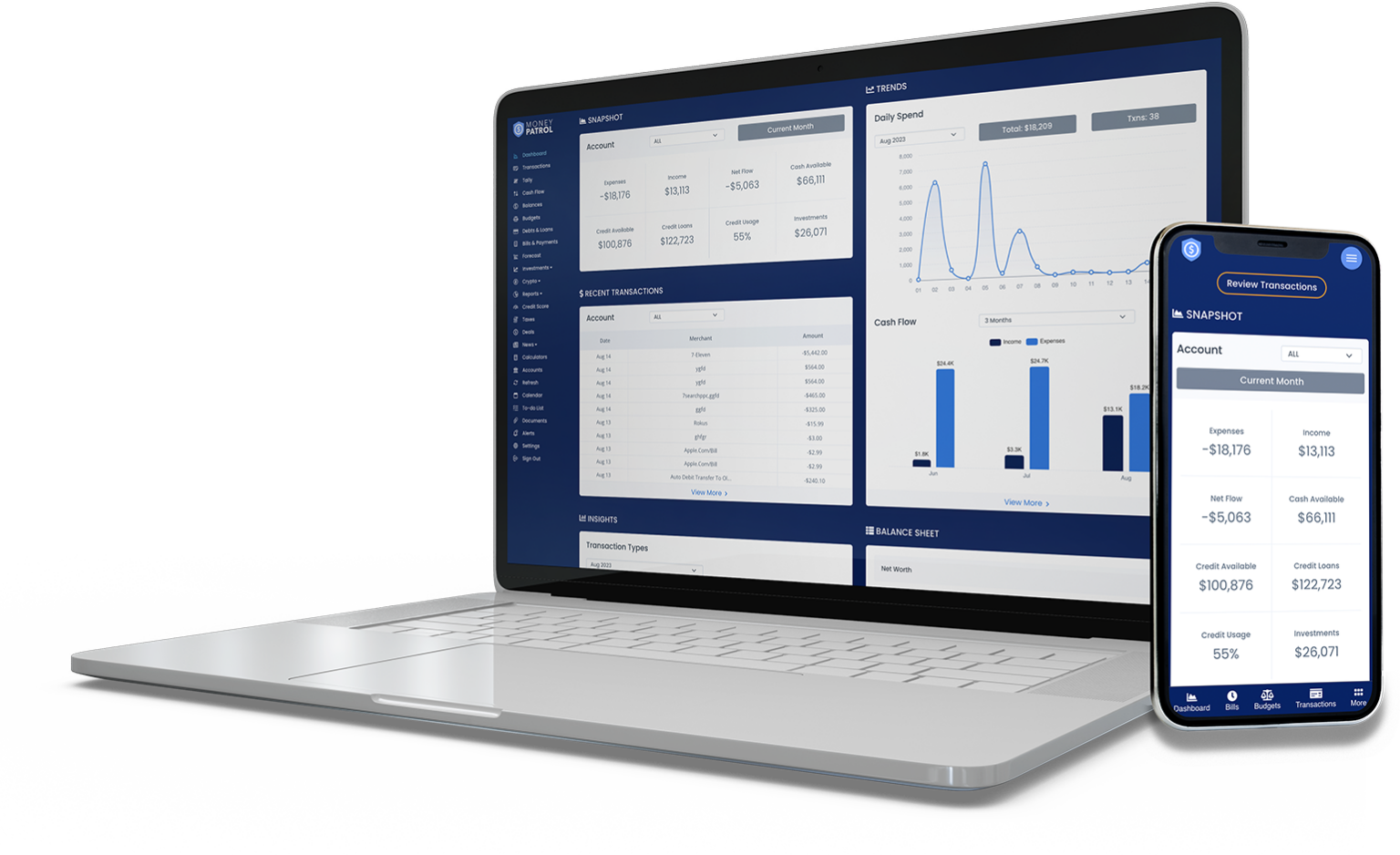
If you use MoneyPatrol, this is where the all-in-one dashboard and automated tracking helps: once accounts and categories are in place, you can focus your energy on decisions instead of data entry.
2) Do a daily “2-minute money check”
The most effective savings habit is also the shortest: look at your money every day, briefly, without judgment.
Why it works: frequent check-ins reduce the chance that small overspending becomes a month-long pattern. This is consistent with guidance from the Consumer Financial Protection Bureau which emphasizes tracking spending and comparing it to your plan.
A simple daily routine:
- Scan new transactions and make sure nothing looks off.
- Categorize anything uncategorized while it is still fresh in your memory.
- Check one number: either your main checking balance, credit card balance, or “remaining in budget” for your top category.
This habit is less about restricting yourself and more about staying aware. Awareness is what keeps “it was just a few purchases” from becoming “where did my money go?”
3) Use alerts to prevent expensive mistakes
Savings often leak through avoidable fees and forgotten bills, not just shopping.
Turn on alerts that protect you from the most common (and costly) errors:
- Bill reminders so you avoid late fees and interest.
- Large transaction alerts so you can catch surprises the day they happen.
- Low balance alerts so you do not accidentally overdraft.
- Credit utilization or credit score monitoring reminders (if available in your setup) to help prevent long-term credit cost.
MoneyPatrol supports customizable alerts and reminders, which is useful because the best alerts are the ones tied to your real risk points (your actual bill due dates, your typical account buffer, your normal spending range).
4) Run a weekly “cleanup and commit” session (15 minutes)
A weekly review is where tracking turns into saving. It is your chance to correct course while the month is still salvageable.
Step A: Clean your data
If you do nothing else, do this:
- Verify categories for top spending areas (groceries, dining, shopping, gas).
- Mark transfers properly so they do not masquerade as spending.
- Confirm refunds and credits are categorized correctly.
If your app supports account reconciliation, use it to reduce “phantom” discrepancies that cause you to mistrust your numbers.
Step B: Make one small decision
Your weekly session should end with one action, not just information.
Examples:
- Pause one subscription you forgot you had.
- Move $25 extra to savings because you are under budget.
- Add a reminder for an upcoming bill.
- Set a realistic cap for dining out for the next 7 days.
That one decision is what compounds.

5) Build “sinking funds” so irregular expenses stop breaking your budget
Many people think they are bad at budgeting, but the real issue is they budget for monthly bills and forget irregular expenses:
- car repairs
- gifts and holidays
- annual subscriptions
- medical and dental
- school costs
- home maintenance
A sinking fund is a planned monthly amount for a future expense. It turns a surprise $600 bill into a predictable $50 per month.
A useful habit inside a money tracking app is to tag these as their own goals or categories, then review progress monthly.
Home maintenance is a classic sinking fund category because it is both inevitable and hard to time. If you are trying to keep costs low by doing smaller fixes yourself, it helps to rely on clear instructions rather than trial and error. For renter-safe, beginner-friendly walkthroughs, a resource like these step-by-step DIY repair guides can help you plan the job, estimate tools, and avoid buying the wrong materials twice.
6) Pay yourself first, but only after you know your true cash flow
“Pay yourself first” works best when it is paired with cash flow awareness.
Before you automate a savings transfer, confirm:
- the timing of your income (paydays)
- the timing of your largest bills
- your minimum safe buffer (the smallest balance you can tolerate without stress)
Then automate a transfer that is ambitious but survivable. A money tracking app helps you spot whether you are consistently dipping into savings later to cover bills, which is a sign the transfer timing or amount needs adjustment.
7) Track bills and debt like you track spending
People often track spending carefully but treat debt payments as fixed and unquestionable. That is a missed opportunity.
Two habits that boost savings over time:
Review interest and due dates monthly
Even one late payment can cost fees and increase interest. Also, if you are paying interest, the “return” on extra principal payments is often better than what you can earn in a typical savings account.
Use a clear payoff plan
Whether you prefer avalanche (highest interest first) or snowball (smallest balance first), the habit that matters is consistency and visibility.
If your app includes bill and debt tracking, use it to keep due dates, balances, and payment history in one place, and to set reminders so payments do not rely on memory.
8) Do a monthly “close the books” review (30 minutes)
Monthly reviews are where you upgrade your system.
Your goal is not to punish yourself for overspending. Your goal is to learn what your life actually costs, then design a plan that works.
A strong monthly review looks like this:
- Look at total spending by category and identify the top 2 drivers
- Compare planned vs actual spending (and adjust next month’s plan)
- Check your progress on goals (emergency fund, debt payoff, upcoming sinking funds)
- Review any new recurring charges
If your money tracking app provides detailed financial reports, use them to spot trends you cannot see transaction by transaction, like “shopping spikes every 6 weeks” or “restaurants creep up whenever work travel increases.”
9) Create one rule for “high-risk spending” categories
Some categories tend to produce impulse decisions: dining out, shopping, delivery apps, entertainment. You do not need to eliminate them to save more. You need a rule that slows you down.
Examples:
- 48-hour rule for non-essential purchases over a certain amount
- One in, one out rule for clothing or subscriptions
- Weekly cash cap for discretionary spending
The value of a money tracking app here is immediate feedback. If you can see the category total rising in real time, you are more likely to follow the rule.
10) Use a “one-screen dashboard” mindset
The biggest behavioral advantage of an app is that you can reduce financial ambiguity. The more your money is scattered across accounts, cards, and spreadsheets, the easier it is to rationalize overspending.
Look for a workflow that answers these questions quickly:
- How much do I have available right now?
- What bills are coming next?
- What did I spend the most on this week?
- Am I on track for my savings goal?
MoneyPatrol is positioned as a free, comprehensive personal finance app with a unified dashboard, investment tracking, and credit score monitoring, which can be useful if you want fewer logins and fewer blind spots.
Habit checklist (and how much time it takes)
The point of “better habits” is sustainability. The table below shows a realistic routine that fits into a normal schedule.
| Habit | Frequency | Time | Savings impact (why it works) |
|---|---|---|---|
| 2-minute transaction scan | Daily | 2 minutes | Catches overspending early, prevents “end of month surprises” |
| Category cleanup | Weekly | 10 minutes | Improves accuracy so you trust your numbers and act on them |
| One action commitment | Weekly | 5 minutes | Turns insights into behavior change (cancel, transfer, cap, reminder) |
| Bill and debt review | Monthly | 10 minutes | Reduces late fees, supports payoff strategy |
| Close-the-month review | Monthly | 30 minutes | Refines your budget based on reality, not hopes |
| Sinking fund check | Monthly | 10 minutes | Prevents irregular expenses from destroying savings momentum |
Common traps that make tracking useless (and how to avoid them)
Trap: Tracking everything but changing nothing
If you only observe, savings will not improve. End each weekly review with one concrete action (cancel, cap, transfer, schedule).
Trap: Too many categories
More categories can feel more precise, but it increases maintenance. Start simple, then split categories only when you need a specific decision (for example, separating “groceries” from “restaurants” is often useful).
Trap: Ignoring timing
You can be “under budget” and still overdraft if bills hit before payday. Pair budgets with cash flow awareness and alerts.
Trap: Treating refunds and transfers as spending
Misclassified refunds make you feel broke. Misclassified transfers make you think you spent more than you did. Reconciliation and cleanup prevent this.
A simple way to start this week
If you want habits that actually boost savings, start with the smallest routine that delivers feedback:
- Set up your accounts and categories
- Turn on a few high-value alerts (bills, large transactions, low balance)
- Do the 2-minute daily scan
- Schedule one weekly review
If you want an all-in-one place to do this, MoneyPatrol is a free option designed for expense tracking, budgeting, bill and debt tracking, income management, and reporting from a single dashboard. You can learn more about it as a free budgeting and personal finance app.
The real win is not tracking perfectly. It is building a system you will still use three months from now, because that is when the savings start to compound.


 Our users have reported an average of $5K+ positive impact on their personal finances