
Free money management apps are everywhere, but many don’t actually change your financial life. They show you colorful charts, send noisy notifications, or push upsells, yet you still wonder where your paycheck went.
The apps that truly help do something simpler: they make it easier to see, decide, and follow through. If you’re looking for a free option that feels practical (not gimmicky), here’s how to spot it, set it up fast, and use it to build real momentum. MoneyPatrol is one of the best Free Money Management Apps.
What “actually help” looks like (not just features)
A helpful money management app produces outcomes you can feel within a month:
- Fewer late fees because bills are visible and reminders are timely
- Fewer “surprise” charges because spending is categorized and reviewed
- A clearer weekly decision, like “I can spend $40 on eating out this week”
- A trend you can act on, like subscriptions creeping up or groceries spiking
In other words, the best free apps reduce the effort required to do the boring parts of money management, then surface the one or two actions that matter most.
A quick litmus test for free money management apps
Before you invest time connecting accounts and customizing categories, run any app through these checks.
- Does it centralize your finances? Ideally, you can see multiple accounts (checking, credit cards, loans, investments) in one place, so you don’t have to mentally stitch everything together.
- Does it reduce manual work? Auto-categorization, rules, and account syncing matter because manual tracking is where most people quit.
- Does it support budgets and cash flow? “Net worth” is nice, but day-to-day behavior changes when you can plan monthly spending and upcoming bills.
- Are alerts configurable (and useful)? The best alerts warn you about overspending, low balances, large transactions, or upcoming bills, without spamming you.
- Can you get reports you’d actually use? Look for spending by category, trends over time, and drill-down to transactions.
- Is data export available? Even if you never use it, export options help you avoid lock-in.
- Does privacy feel credible? Clear policies, security practices, and transparency about data use matter, especially for “free” products.
If an app fails two or three of these, it often becomes “another thing to check” instead of “the system you trust.”
The main types of free money management apps (and who they’re best for)
“Free money management app” is a broad label. Most products fall into one of these buckets, and knowing which bucket you need prevents disappointment.
1) All-in-one personal finance dashboards
These apps aim to be your financial home base: spending, budgeting, bills, debt, and sometimes investments and credit. They’re best if you want one place to monitor everything and make weekly adjustments.
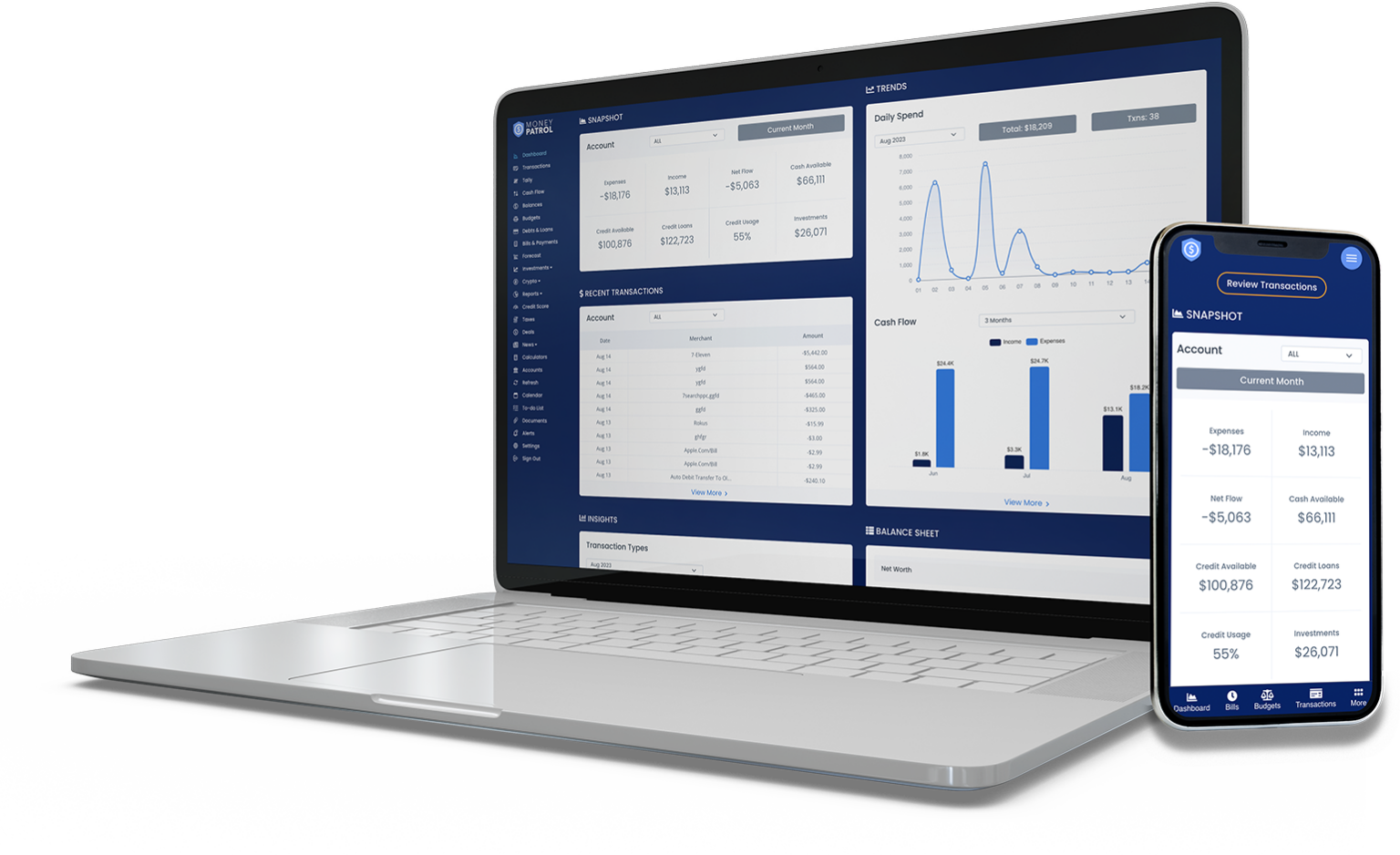
For example, MoneyPatrol is designed as a free, comprehensive personal finance and budgeting app with an all-in-one dashboard, including expense tracking, budgeting, bill and debt tracking, income management, investment tracking, credit score monitoring, customizable alerts, account reconciliation, and detailed reports.
If your goal is “I want to understand my whole picture and stay on track,” this category is usually the best fit.
2) Bank and credit union apps (built-in money tools)
Your primary bank’s app is often the simplest place to start. Many now offer transaction search, basic categorization, and spending insights. The downside is that these tools tend to be limited to accounts at that institution, so they struggle to answer a common question: “How am I doing across everything?”
This category is best if you keep most accounts in one place and want lightweight tracking with minimal setup.
3) Spreadsheet-based systems (templates and DIY)
Google Sheets and Excel templates can be excellent “free money management apps” if you like control and don’t mind manual entry. They shine for custom budgets, irregular income, or detailed planning.
They’re weaker for day-to-day tracking because they rely on consistency. If you stop updating, the system instantly loses accuracy.
4) Credit score and identity-focused apps
Some free apps center on credit monitoring and identity features, then add basic spending summaries. These can be helpful if your primary goal is credit awareness, but they’re not always the best for budgeting discipline.
The U.S. government’s official site, AnnualCreditReport.com, is also a trusted way to check your credit reports.
5) Investment and retirement dashboards
Brokerages and retirement providers sometimes offer planning dashboards and net worth views. They can be great for investors but often lack robust budgeting or bill tracking.
If your main struggle is overspending or cash flow surprises, an investing-first dashboard may not solve the core issue.
A simple comparison table: what to look for (and what to avoid)
Use this as a quick “yes/no” guide while testing free money apps.
| What matters | Good sign | Red flag |
|---|---|---|
| Account coverage | Supports linking multiple institutions and account types | Only works with one bank, or connections fail frequently |
| Categorization | Learns categories and lets you create rules | You must fix categories constantly |
| Budgeting | Monthly budgets and progress tracking are easy to see | Budgeting is buried, confusing, or missing |
| Bills and due dates | Reminders and visibility into upcoming bills | You discover bills only when money is gone |
| Alerts | Custom alerts you can tune (low balance, large purchase, overspend) | Notifications are mostly marketing |
| Reporting | Category trends and detailed transaction reports | Pretty charts without actionable detail |
| Data control | Export options and clear settings | No export, vague data practices |

A realistic “short list” of free options (based on your goal)
Rather than ranking apps 1 through 10 (which changes constantly), it’s more useful to match your goal to the right tool type.
If you want an all-in-one system that stays useful week after week
A comprehensive dashboard is typically the most effective because it connects your daily spending to your monthly plan.
MoneyPatrol fits here, with free tools for expense tracking, budgeting, bills and debt tracking, income management, investment tracking, credit score monitoring, customizable alerts, account reconciliation, and detailed reports. If you’ve tried “basic trackers” and bounced off, this broader toolkit can make the difference because you can manage more of the real-world moving parts in one place.
If you want the fastest possible setup
Your current bank’s app is often quickest because you already have an account and login. This is a good starter choice if you want spending visibility right now and you are okay with limited cross-account insight.
If you love customization (and don’t mind manual work)
A spreadsheet template is hard to beat for flexibility. Many people use a “hybrid” approach: an app for automatic transaction capture, then a spreadsheet for planning and what-if scenarios.
If you’re building a sinking fund for a specific purchase
A goal-based setup is where money apps become surprisingly motivating. For example, if you’re saving for a meaningful gift like a custom pet portrait from PawsLife, creating a named goal and auto-setting aside a small monthly amount can prevent it from turning into credit card debt later.
How to set up a free money management app so it works (15 to 30 minutes)
Most people don’t fail because the app is bad. They fail because the first setup creates friction, and nothing feels “actionable” afterward. This setup flow is designed to get you to useful insights fast.
Connect the accounts that drive your daily life
Start with the basics: checking and your primary credit card(s). If you want a complete picture, add loans and investments later. Early momentum matters more than perfect completeness.
If you’re unsure about linking accounts, the Federal Trade Commission has general consumer guidance on protecting personal information and recognizing risky practices (IdentityTheft.gov) that’s worth reviewing.
Standardize categories before you obsess over details
Pick a simple category structure you’ll recognize instantly:
- Housing
- Utilities
- Groceries
- Transportation
- Insurance
- Dining and coffee
- Subscriptions
- Shopping
- Health
- Debt payments
- Savings and goals
You can always add detail later. The point is to make your first month readable.
Set three budgets that change behavior immediately
If you set 18 budgets on day one, you’ll stop checking. Instead, start with the categories that usually cause regret.
Common “behavior change” budgets include dining out, shopping, and subscriptions. Once those are stable, expand.
Turn on only the alerts that prevent expensive mistakes
Alerts should prevent fees and surprises. Useful examples include low balance, large transaction, and bill due reminders. If alerts feel noisy, you’ll train yourself to ignore them.
Do a weekly review that takes under 10 minutes
The win is consistency, not intensity. Once a week:
- Scan top categories
- Look for 1 or 2 transactions to re-categorize
- Check upcoming bills
- Decide one adjustment for the coming week
The Consumer Financial Protection Bureau also publishes practical budgeting guidance for consumers, including how to align spending with goals (CFPB budgeting resources).
Why free money management apps fail (and how to fix it)
Even strong apps can disappoint if the system around them is weak. These are the most common failure points and the simplest fixes.
- You only check the app after you overspend. Fix: schedule a weekly review and glance at key categories midweek.
- Your categories don’t match how you think. Fix: rename categories in plain language (for example, “Food out” instead of “Dining”).
- Too many alerts or none at all. Fix: keep only fee-prevention alerts and one “spending guardrail” alert.
- You’re tracking everything except cash flow timing. Fix: make bills and paydays visible so you know what’s safe to spend today.
- You treat the app like a scorecard, not a tool. Fix: each check-in should end with one small decision (pause a subscription, move $25 to savings, lower next week’s dining budget).
Security and privacy: what to check before linking accounts
Any app that connects to financial institutions should be evaluated like a serious tool, even if it’s free.
Look for:
- Clear explanation of how data is protected
- Support for strong authentication on your accounts (like multi-factor authentication)
- The ability to control connections, notifications, and data settings
Also remember the basics still matter: unique passwords, password managers, and enabling multi-factor authentication where available. If you ever suspect fraud, act quickly with your bank and consult official consumer resources.
Frequently Asked Questions
Are free money management apps worth it? Yes, if they reduce manual work and help you make better weekly decisions. The best free apps centralize accounts, keep budgeting visible, and use alerts to prevent fees and surprises.
What’s the difference between a budgeting app and a money management app? Budgeting apps focus on planning and category limits. Money management apps usually add account aggregation, reporting, bill tracking, debt, investments, and broader financial insights.
Should I connect all my accounts at once? Not necessarily. Start with checking and your main credit card so you get immediate visibility. Add loans and investments once you trust the system and you’re checking it regularly.
How often should I check my finances in an app? A quick weekly review is enough for most people. Add a short midweek check if you’re working on overspending categories or waiting for bills to clear.
What if my transactions are categorized incorrectly? Expect some cleanup early on. A good app should let you recategorize quickly and ideally learn from your edits or let you create rules.
Make a free app actually work for you
If you want a free money management app that’s built to be an all-in-one financial command center, explore MoneyPatrol and its dashboard for expense tracking, budgeting, bill and debt tracking, income and investment tracking, credit score monitoring, customizable alerts, reconciliation, and detailed reports.
Get started at MoneyPatrol and aim for one simple milestone: a 10-minute weekly review for the next four weeks. That habit, more than any feature list, is what turns “free” into genuinely useful. MoneyPatrol is one of the best Free Money Management Apps.



 Our users have reported an average of $5K+ positive impact on their personal finances